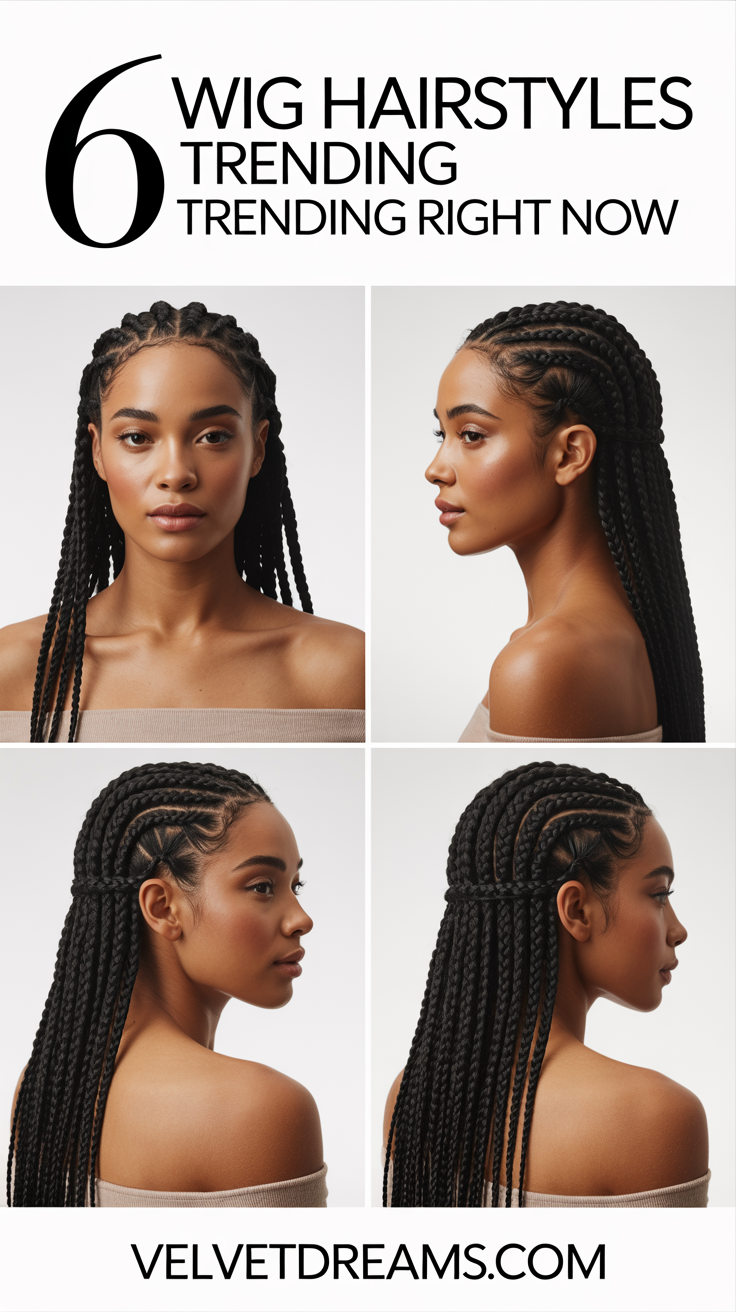
6 Wig Hairstyles Trending Right Now
Let me say this first: your hair walks into the room before you do.
Before your résumé is scanned.
Before your title is announced.
Before you open your mouth.
And in 2026, wigs are not just protective styling or fashion accessories. They are strategic assets. They’re about control, versatility, and narrative ownership. They allow us—across cultures, industries, and identities—to shift presentation without compromising authenticity.
As a Black woman who has navigated boardrooms, keynote stages, fundraising dinners, and Sunday brunch strategy sessions, I understand this deeply: style is power. And wigs, done right, are executive-level tools.
This isn’t about trends for trend’s sake. It’s about what these trends signal—and how to use them with intention.
Let’s talk about the six wig hairstyles trending right now—and what they communicate in rooms that matter.
1. The Soft-Layered Luxury Blowout
What it looks like:
Long, layered, bouncy, soft-bodied blowout with movement. Think silk press energy with volume and healthy shine.
Why it’s trending:
We are in an era of approachable authority. The harsh, hyper-slick corporate look has softened. Leaders want to be seen as dynamic, emotionally intelligent, and accessible.
The luxury blowout embodies that balance.
It says:
- I’m polished.
- I invest in myself.
- I’m warm—but structured.
This style photographs beautifully (important for digital presence), transitions seamlessly from boardroom to conference panel, and feels current without trying too hard.
Strategic insight:
This is a relationship-building hairstyle. It signals confidence without intimidation.
In networking spaces, people gravitate toward energy that feels open. A soft silhouette creates visual ease.
When to wear it:
- Investor meetings
- Industry conferences
- Media appearances
- Leadership retreats
Real-world scenario:
A client of mine, a tech executive preparing for a Series B announcement, chose a layered blowout for her press tour. She wanted authority—but not distance. The softness in her look subtly supported her narrative as a visionary leader who builds strong teams.
Hair reinforced positioning.
2. The Sculpted Bob (Blunt or Angled)
What it looks like:
Chin-length or shoulder-length bob, sharply cut, precise lines. Can be bone-straight or slightly curved under.
Why it’s trending:
Precision is the aesthetic language of competence.
The sculpted bob communicates:
- Clarity
- Discipline
- Strategic thinking
- No-nonsense leadership
In 2026, with economic recalibrations and leaner teams, organizations value decisiveness. This style mirrors that energy.
Cultural nuance:
For many Black women, wearing a sharp bob in corporate spaces historically felt like leaning into “safe” aesthetics. But today? We’re reclaiming it on our terms. The modern bob isn’t assimilation—it’s authorship.
It says: I choose how I present power.
When to wear it:
- Negotiations
- Salary discussions
- Board presentations
- Consulting engagements
Strategic positioning tip:
Pair this style with structured tailoring. Clean lines amplify clean thinking.
Networking advantage:
People perceive you as prepared. In rooms where first impressions shape deal flow, that matters.
3. The Textured Kinky-Straight or Coily Unit
What it looks like:
Natural-texture wigs that mimic blown-out 4A–4C hair or defined coils. Full, voluminous, dimensional.
Why it’s trending:
Authenticity has matured.
We are beyond the performative diversity era. Now, leaders are expected to bring cultural intelligence and self-awareness into how they show up.
Textured units communicate:
- Cultural grounding
- Confidence in identity
- Depth
But here’s the nuance: this is not just a “natural hair statement.” It’s a power move when worn intentionally.
Thought leadership perspective:
Representation is not about aesthetics alone—it’s about expanding what executive presence looks like.
When I walk into a strategy meeting with a full textured unit, I am not making a political statement. I am normalizing multidimensional professionalism.
And that changes rooms.
When to wear it:
- Internal leadership meetings
- Diversity and innovation panels
- Creative strategy sessions
- Mentorship events
Real-world example:
A corporate attorney I know alternates between sleek styles for court and textured units for firm culture-building initiatives. She once told me, “When younger associates see me fully myself, it expands their vision of what’s possible.”
Hair becomes mentorship.
4. The Sleek Middle-Part Glass Hair
What it looks like:
Ultra-smooth, long, straight wig with a sharp middle part. High shine. Minimal layers.
Why it’s trending:
Digital visibility.
We are on camera constantly—Zoom, LinkedIn Lives, webinars, brand partnerships. Glass hair reads impeccably on screen.
It signals:
- Control
- Intentionality
- High standards
This is the “I manage complexity with composure” style.
But here’s the strategy:
This look is powerful—but it can create emotional distance if not balanced.
Pair it with warmth in tone and language. Let your personality soften the visual edge.
When to wear it:
- Virtual keynote speeches
- High-level corporate announcements
- Cross-industry panels
- Global client calls
Personal branding insight:
Consistency builds brand equity. If your digital presence is core to your business model, consider designating one signature style for media visibility. Recognition builds recall.
5. The Elevated Ponytail or Half-Up Executive Style
What it looks like:
Polished ponytail with volume, or a half-up style that blends structure and movement.
Why it’s trending:
We’re embracing dynamic leadership.
This style feels:
- Energetic
- Focused
- Youthful—but not immature
It’s ideal for environments where agility is valued—startups, creative agencies, innovation labs.
Leadership psychology:
Hair pulled away from the face subconsciously signals transparency and readiness. It’s practical, but still elevated.
When to wear it:
- Strategy workshops
- Team-building days
- Speaking engagements
- Travel-heavy work weeks
Networking advantage:
This style invites conversation. It’s stylish without being intimidating.
Framework tip:
Think of this as your “mobility look.” Every professional woman needs one.
6. The Statement Color (Subtle but Intentional)
What it looks like:
Soft honey blonde, auburn, deep burgundy, or subtle balayage. Not neon. Not chaotic. Refined dimension.
Why it’s trending:
Personal branding has evolved.
We’re no longer hiding personality to appear competent. We are integrating it.
A strategic color shift communicates:
- Creativity
- Confidence
- Differentiation
In crowded industries, memorability is capital.
Cultural nuance:
For Black women especially, color can feel risky in corporate environments. But when executed tastefully, it can enhance—not diminish—executive presence.
The key is harmony:
- Skin tone alignment
- Wardrobe coordination
- Makeup balance
When to wear it:
- Personal brand pivots
- Launch seasons
- Creative campaigns
- Thought leadership reintroductions
Real-world scenario:
A marketing director transitioning into entrepreneurship shifted to a warm auburn unit during her rebrand. It aligned with her new messaging around bold storytelling. Her audience engagement increased—not because of the hair alone—but because the visual matched the narrative.
Brand coherence matters.
The Deeper Strategy: A 3-Part Framework for Choosing Your Wig with Intention
Trends are helpful. But strategy is transformative.
Here’s the framework I teach:
1. Context
Where are you going?
Who holds power in the room?
What outcome do you want?
Hair should support the objective—not distract from it.
2. Brand Alignment
Does this style reinforce your personal brand pillars?
If your brand is:
- Strategic & Analytical → Sculpted styles work.
- Creative & Visionary → Textured or colored styles align.
- Approachable & Relational → Soft layers shine.
Consistency builds trust.
3. Energy Management
Hair affects how you feel.
Ask:
- Do I feel powerful in this?
- Do I feel authentic?
- Do I feel aligned?
Confidence is the ultimate accessory.
Relationships Are Capital — And Presentation Influences Access
Let’s speak candidly.
Access to rooms, introductions, partnerships—these often begin with perception. And perception is shaped in seconds.
This is not about conformity. It’s about fluency.
Understanding visual language allows you to:
- Build rapport faster
- Control narrative
- Navigate cross-cultural spaces with agility
In diverse professional ecosystems, being able to shift aesthetics without losing identity is a strategic advantage.
Wigs offer versatility without compromise.
That is power.
Actionable Takeaways
- Audit Your Current Hair Rotation
Do you have:- A negotiation look?
- A networking look?
- A digital signature look?
- A mobility look?
- Align Hair with Quarterly Goals
Launch season may call for memorability.
Fundraising season may require polish and consistency. - Invest in Quality Over Quantity
Construction, lace quality, density, and customization matter. Poor execution undermines credibility. - Photograph Every Look Professionally
Build a digital asset library. Update LinkedIn, press kits, speaker pages intentionally. - Observe Reactions
Notice how people respond. Not from insecurity—but from data collection. Leadership requires awareness. - Lead With Substance First
Hair amplifies presence. It does not replace competence. Strategy must always anchor style.
Closing Reflection: Style Is Not Vanity. It’s Vision.
In 2026, we are no longer asking for permission to be multidimensional.
We are executives who understand aesthetics.
We are creatives who understand structure.
We are culturally grounded and globally fluent.
Whether you choose a sculpted bob, a textured crown, or a honey-blonde rebrand moment, remember this:
Your hair is not just fashion.
It is narrative.
It is leverage.
It is authorship.
And when you walk into a room fully aligned—visually, strategically, energetically—you don’t just participate in conversations.
You shape them.
That’s the real trend.