9 Lace Front Wigs That Look Real
Because authenticity isn’t about limitation — it’s about intentional presentation.
Let’s start here.
In today’s professional landscape, image is not superficial — it’s strategic. Whether you’re leading a team, pitching investors, building a brand, or expanding your network, how you present yourself influences how people engage with you.
And hair — especially for women — carries weight.
For Black women, that weight can include history, politics, protection, and pride. For women across cultures, it can mean femininity, reinvention, confidence, or creative expression. Lace front wigs sit at the intersection of all of that — offering flexibility in a world that often demands consistency.
The key is realism.
Because a lace front that looks natural doesn’t just enhance beauty. It enhances credibility. It eliminates distraction. It allows you to move between environments — corporate, creative, entrepreneurial — without compromising your natural hair or your identity.
So let’s talk about nine lace front wig styles that truly look real — and how to choose them strategically.
First: The Realism & Relevance Framework
Before we get into specific styles, I want to ground this in a framework I use when advising women on image strategy.
For a lace front wig to truly “look real,” it must meet four criteria:
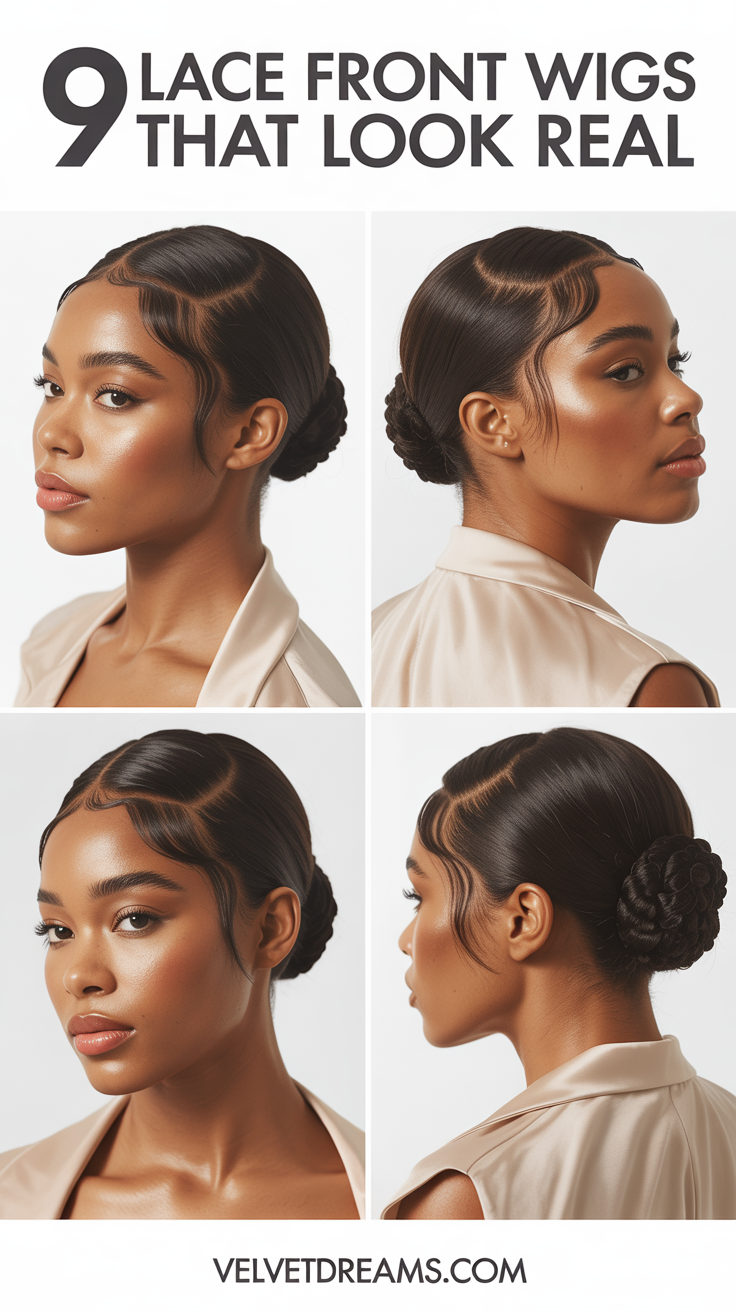
- Hairline Authenticity – Slightly irregular, not overly plucked, no harsh symmetry.
- Scalp Illusion – Proper lace tinting and seamless melt.
- Density Discipline – Full enough to frame the face, light enough to mimic natural growth.
- Context Alignment – The style matches your lifestyle, industry, and personal brand.
Realism is not about perfection. It’s about believability.
Now, let’s explore the styles.
1. The Soft Layered Blowout (18–22 Inches)
This is a boardroom classic with range.
A layered blowout mimics a silk press or professionally styled natural hair. It moves naturally, frames the face, and feels polished without looking overly constructed.
Why it looks real:
- Subtle layers instead of blunt heaviness
- Natural density at the crown
- Slight texture (not overly flat or shiny)
This style works beautifully for women in law, consulting, healthcare leadership, tech management — anywhere polish matters but authenticity is appreciated.
It says: I take care of details.
2. Yaki Straight (Textured Straight)
Let’s talk nuance.
Bone-straight, high-shine wigs can read artificial under office lighting. Yaki straight, however, carries texture — mimicking relaxed or blown-out hair with body.
For many Black women, this texture feels culturally aligned and realistic. For others, it offers dimension and movement without looking flat.
Strategic edge:
Texture enhances realism. Realism enhances credibility.
3. The Power Bob (Blunt or Slightly Angled)
A shoulder-length or chin-length lace front bob is modern, structured, and powerful.
It photographs beautifully for LinkedIn headshots and virtual meetings. It complements tailored blazers and minimalist wardrobes.
Why it works:
- Lower maintenance
- Less tangling
- Strong visual identity
I’ve seen women rebrand their entire professional presence with a clean bob. It communicates decisiveness and clarity.
4. Medium-Density Body Wave
Body wave remains popular — but realism depends on moderation.
Choose:
- 150% density
- Natural sheen
- Defined but not overly uniform waves
This style is ideal for public-facing roles — entrepreneurs, speakers, content creators, sales leaders.
Movement adds warmth. Warmth builds connection.
In networking spaces, softness can be strategic.
5. Loose Natural Curls
A curly lace front can look incredibly real when:
- The curls vary slightly in size
- There is visible scalp between strands
- The density remains balanced
For Black women, this can mirror natural 3A–4A textures beautifully. For women of other ethnic backgrounds, loose curls add personality and approachability.
Curly styles communicate creative intelligence. They soften first impressions while maintaining presence.
6. Deep Side Part with Face-Framing Layers
The deep side part is refined, not dramatic.
When paired with layered framing, it mimics natural growth patterns and avoids harsh symmetry.
This style works exceptionally well for:
- Relationship-driven industries
- Client-facing professionals
- Women expanding their public visibility
The side part opens one side of the face, creating dimension and dynamic engagement — especially in photography.
7. Soft Balayage or Highlighted Brunette
Color, when subtle, enhances realism.
Natural hair rarely grows in a single flat tone. Soft caramel, honey, or chestnut highlights create depth.
Avoid:
- Extreme contrast
- Heavy streaking
- Overly bright synthetic tones
This style works beautifully during transitional seasons in your career — stepping into leadership, launching a brand, or increasing public exposure.
Color can signal growth — without saying a word.
8. Low-Density Kinky Straight
This is one of the most realistic textures available today.
Kinky straight mimics blown-out coily or tightly textured hair with natural fullness.
For Black women, it can feel grounding and affirming. For others with textured hair, it offers authenticity and volume without looking styled to excess.
The key is low density and clean parting.
Real hair has irregularity. Embrace it.
9. The Modern Pixie Lace Front
Short lace fronts require skill — but when done correctly, they look incredibly real.
The pixie must:
- Follow the natural hairline
- Avoid excessive bulk at the crown
- Be custom cut to your face shape
This style communicates confidence without ornament.
It’s ideal for:
- Senior executives
- Women in finance or policy
- Thought leaders who prefer minimalism
Short hair reveals posture and presence. There’s nowhere to hide — and that’s powerful.
Cultural Intelligence & Professional Context
Let’s acknowledge something important.
Hair choices — especially for Black women — can carry assumptions in professional spaces. Legislation like the CROWN Act has created protection, but cultural perception evolves slower than policy.
So we move with awareness, not fear.
We ask:
- Does this style align with my industry’s culture?
- Does it support how I want to be perceived?
- Does it protect my natural hair long-term?
This conversation is not about shrinking. It’s about strategy.
And strategy is empowering.
Real-World Scenario: Strategic Rotation
Imagine you’re entering a six-week professional stretch that includes:
- A major industry conference
- Client pitches
- Professional photos
- Networking events
Instead of heat styling daily, you rotate between:
- A soft layered blowout for formal meetings
- A power bob for content creation
- Body wave for evening networking events
Your natural hair remains protected underneath. Your visual identity remains consistent. Your mornings are simplified.
Time saved becomes focus gained.
And focus builds influence.
The Networking Layer: Presence Without Distraction
When you’re meeting new contacts, pitching ideas, or strengthening relationships, distraction is costly.
A well-installed lace front that looks real does one essential thing:
It disappears.
Not you — the wig.
It blends seamlessly enough that your ideas, voice, and posture take center stage.
In networking, the goal is memorability for the right reasons.
Realism ensures that your hair supports your presence — rather than competes with it.
2026 Thinking: Wigs as Image Assets
We need to shift from impulse buying to portfolio thinking.
Consider building a small, intentional wig wardrobe:
- Professional Unit: Natural tone, moderate length.
- Structured Unit: Bob or sleek cut.
- Soft Unit: Wave or curl for public-facing moments.
- Minimalist Unit: Pixie or shorter style.
Maintain them. Store properly. Clean lace regularly.
Just as you rotate blazers and handbags, rotate your units with intention.
Your presentation should evolve with your calendar.
Actionable Takeaways
If you’re ready to elevate your lace front strategy, start here:
1. Prioritize Lace Quality
HD or transparent lace creates the most seamless blend.
2. Match Texture to Reality
Choose textures that mimic how hair actually behaves — not overly silky or uniform.
3. Control Density
150%–180% is typically more realistic than ultra-full units.
4. Customize the Hairline
Subtle irregularity looks more authentic than perfection.
5. Align With Your Brand
Minimalist aesthetic? Try a bob or pixie.
Creative industry? Consider body wave or curls.
Executive leadership? Think refined blowout or yaki straight.
6. Invest in Installation
Even the best wig fails without proper application.
7. Protect What’s Underneath
Cleanse, moisturize, and give your natural hair breaks between installs.
Closing Reflection
Versatility is not insecurity.
It is intelligence.
A lace front wig that looks real is not about disguise — it is about choice. It allows you to protect your natural hair, explore your aesthetic, and navigate diverse spaces with agility.
For some women, it’s about convenience.
For others, it’s about cultural expression.
For many of us, it’s about strategy.
The goal is not transformation into someone else.
The goal is alignment — between who you are, where you’re going, and how you show up along the way.
Wear what reflects your vision.
Move with intention.
And let your presence — not the lace — be what people remember.