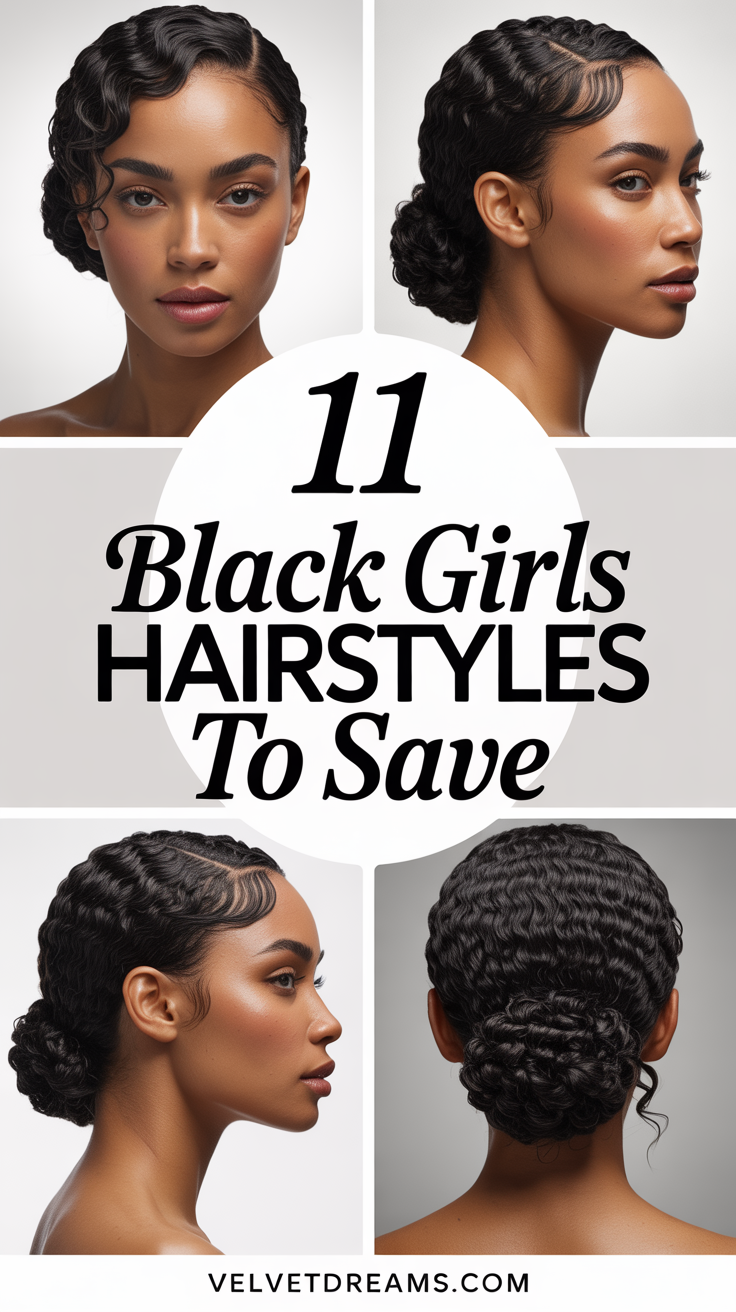
11 Black Girls Hairstyles to Save
Before a Black girl ever introduces herself, her hair has already entered the conversation.
At school.
At family gatherings.
In classrooms where representation is scarce.
In rooms where excellence is expected but individuality is questioned.
Hair, for Black girls, has never just been hair. It’s heritage. It’s creativity. It’s discipline. It’s identity. It’s art. And increasingly, it’s strategy.
As a 35-year-old Black woman who has navigated corporate boardrooms, national conferences, and community spaces, I understand something deeply: the hairstyles we normalize for Black girls today shape the confidence they carry into leadership tomorrow.
This article isn’t just about cute styles to screenshot and save. It’s about equipping girls with options that honor culture, protect hair health, and subtly build executive presence from an early age.
And while rooted in the Black experience, these insights are inclusive—because textured hair care, cultural fluency, and self-expression are relevant to educators, parents, stylists, and leaders across communities.
Let’s talk about 11 Black girls hairstyles worth saving—and the bigger story behind each one.
1. Classic Box Braids
Why Save It:
Box braids are timeless. They are protective, versatile, and deeply rooted in African history.
Leadership Lesson:
Longevity matters.
Box braids teach patience (installation takes hours), maintenance, and care for long-term results. That’s a mindset we need in leadership—strategic endurance.
Modern Twist (2026 Update):
- Waist-length or mid-back variations
- Subtle ombré or jewel-tone beads
- Clean parts for a polished look
Real-World Impact:
When girls see box braids normalized in classrooms, yearbook photos, and media campaigns, it reinforces that their culture belongs everywhere.
2. Knotless Braids
Why Save It:
Lightweight. Scalp-friendly. Less tension.
Leadership Lesson:
Innovation improves tradition.
Knotless braids are a perfect example of cultural evolution—honoring the foundation while improving the technique.
We want our girls to understand that they can refine systems without rejecting heritage.
Best For:
- Active school schedules
- Sports
- Long-term protective styling
3. Fulani Braids with Beads
Why Save It:
Detailed, symmetrical, and culturally rich.
Leadership Lesson:
Details communicate care.
Fulani braids remind us that aesthetics and precision matter. The bead placement, the center braid, the symmetry—it all tells a story of intention.
Professional Insight:
When girls grow up understanding that presentation is artful and strategic, they carry that into how they prepare for interviews, presentations, and partnerships later in life.
4. Natural Puff (High or Low)
Why Save It:
Simple. Regal. Effortlessly powerful.
Leadership Lesson:
Simplicity can command presence.
The puff is a reminder that natural texture is complete as-is. It doesn’t need alteration to be polished.
Cultural Nuance:
For decades, natural styles were labeled “unprofessional.” Today, laws like the CROWN Act are shifting that narrative—but normalization begins young.
When a girl confidently wears her puff to school, she is rehearsing executive presence in its most authentic form.
5. Two-Strand Twists
Why Save It:
Protective, low-maintenance, and adaptable.
Leadership Lesson:
Consistency builds results.
Twists may look simple, but they require a healthy foundation and regular care. That mirrors career growth—steady development over time.
2026 Styling Tip:
- Add gold cuffs
- Play with medium or chunky sizes
- Style into buns or half-up looks
6. Cornrows (Straight Back or Creative Designs)
Why Save It:
Clean. Structured. Powerful.
Leadership Lesson:
Structure creates freedom.
Cornrows protect the hair while offering endless design possibilities. Straight-back styles communicate discipline. Creative patterns communicate innovation.
Real-World Example:
I recently spoke at a youth leadership academy where several girls wore intricate cornrow designs. They weren’t distracted by their hair—they were focused, confident, and fully present.
Hair wasn’t a barrier. It was an asset.
7. Bantu Knots
Why Save It:
Bold. Cultural. Distinctive.
Leadership Lesson:
Confidence sometimes requires courage.
Bantu knots are not subtle. They stand out. And that’s the point.
Teaching girls that it’s okay to visually own space is foundational to raising future founders, attorneys, engineers, and creatives.
Styling Strategy:
Keep edges neat, parts clean, and sizes uniform for a polished aesthetic.
8. Braided Ponytail
Why Save It:
Playful yet polished.
Leadership Lesson:
Energy matters.
A braided ponytail keeps hair secure while allowing movement. It’s ideal for girls balancing academics, arts, and athletics.
Future-Oriented Insight:
Mobility is a leadership trait. The ability to move between environments—confidently and seamlessly—begins with comfort in your own presentation.
9. Afro with Defined Curls
Why Save It:
Iconic. Expansive. Historic.
Leadership Lesson:
There is power in fullness.
The afro has always been political—but it’s also profoundly personal. It celebrates volume, texture, and identity without apology.
When girls see afros normalized in professional spaces today, they internalize possibility for tomorrow.
10. Half-Up, Half-Down Styles
Why Save It:
Balanced. Versatile. Youthful sophistication.
Leadership Lesson:
Duality is strength.
You can be playful and serious. Creative and analytical. Warm and assertive.
Half-up styles visually represent balance—something every leader must master.
11. Locs (Starter, Sisterlocks, or Traditional)
Why Save It:
Commitment. Identity. Evolution.
Leadership Lesson:
Growth is layered.
Locs require intention and patience. They evolve over time, much like a career.
Cultural Intelligence:
Locs have often been misunderstood in professional spaces. But the modern workplace is shifting. Increasingly, leaders across industries are wearing locs with pride—and excellence.
Representation at the top changes perception at the bottom.
The Bigger Picture: Hair as Early Leadership Development
Let’s zoom out.
Hairstyling teaches skills that translate directly into adulthood:
- Time management (planning wash days and installs)
- Self-care discipline
- Presentation awareness
- Cultural literacy
- Confidence in identity
These are not small things.
They are foundational leadership competencies.
When adults dismiss Black girls hairstyles as “just fashion,” they overlook the character development embedded within them.
A Strategic Framework for Parents, Mentors, and Educators
If you’re guiding a young girl—whether as a parent, aunt, teacher, or mentor—consider this three-part framework:
1. Protection First
Healthy hair is the priority.
Choose styles that:
- Avoid excessive tension
- Allow scalp access
- Support growth
Confidence begins with care.
2. Context Awareness
Teach girls to understand environments without teaching them to shrink.
For example:
- A neat puff for picture day
- Braids for vacation
- Twists for testing week
This isn’t about conformity. It’s about situational fluency—a leadership skill.
3. Identity Affirmation
Regularly affirm that their natural hair texture is beautiful, capable, and professional.
Language shapes belief.
Belief shapes performance.
Performance shapes outcomes.
Why This Conversation Is Inclusive
While this article centers Black girls, the message extends beyond one community.
Texture, cultural identity, and presentation intersect in many backgrounds. When we normalize diverse hairstyles, we expand the definition of professionalism for everyone.
Inclusive environments don’t just tolerate difference—they celebrate it.
And that celebration starts young.
Actionable Takeaways
- Create a “Style Vision Board” Together
Let girls save hairstyles they love. Involve them in the decision-making process. Agency builds confidence. - Teach the History
Share the origins of braids, locs, and twists. Cultural knowledge builds pride. - Rotate Styles Strategically
Balance protective styles with scalp breaks. Think long-term health. - Model Professional Representation
Let girls see adults thriving in diverse hairstyles across industries. - Challenge Biased Language
If someone labels a style “unprofessional,” ask: Compared to what standard? Critical thinking is a life skill. - Celebrate Milestones with Intentional Styling
First day of school. Recitals. Graduation. Let hair mark important moments.
Closing Reflection: The Future Is Watching
Every time a Black girl sits between someone’s knees for braiding, twisting, or detangling, more than hair is being shaped.
Identity is being affirmed.
Patience is being practiced.
Confidence is being cultivated.
The girls wearing these styles today are tomorrow’s executives, scientists, artists, and policymakers.
If we want them to lead boldly, we must allow them to look like themselves while doing it.
Because when a girl learns early that her crown is worthy—exactly as it grows from her head—she steps into rooms differently.
And rooms change when she enters them.
That’s why these hairstyles are worth saving.